Automatic Breeding Cage for 10,000 Parent Stock Chickens
What Is a Chicken Breeder Cage System?
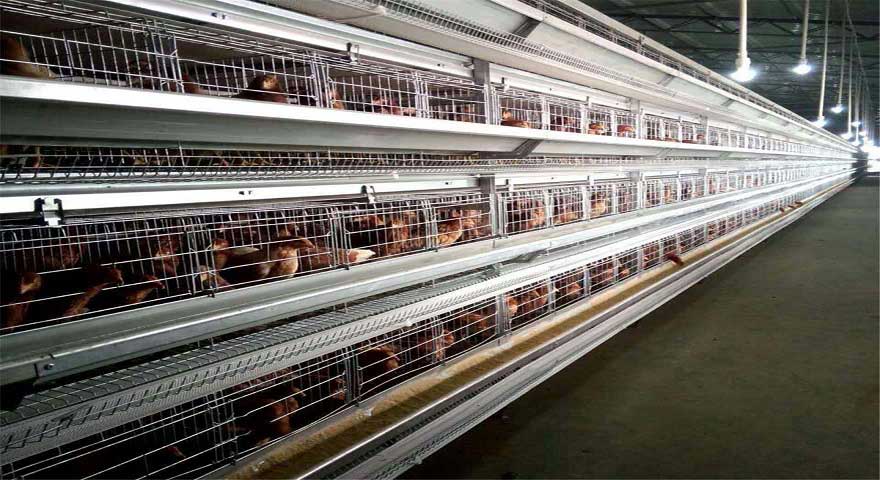
A chicken breeding cage system is a housing type for parent stock flocks of laying hens intended for egg production for hatcheries. It consists of breeder cages, separate feeding and watering systems, egg collecting equipment, and an environment control system. Such a system allows for obtaining better fertility and hatchability and provides high-quality flock maintenance.
Large-scale hatcheries tend to choose breeder cages because they ensure high rates of fertility and hatchability, better biosecurity, reduced labor costs, and easier management.
Breeding Cage vs Layer Cage: What Is the Difference?
| Item | Breeder Cage | Layer Cage |
|---|---|---|
| Purpose | Provide the hatcheries with fertile eggs | Meet the demand for table eggs |
| Male birds | Required | Not required |
| Fertilized eggs | Production of fertile eggs | No |
| Feeding | Separate feeders for rooster and hens | Uniform feeding |
| Egg collection | Gentle collection of hatching eggs | Standard egg collection |
| Management | More complex | Simpler |
Why Automatic poultry breeding cages for 10,000 Birds?
Increased fertility rate
Controlled breeding process ensures higher fertility rates due to optimal male-to-female ratios.
Improved mating process
Reduced fighting among roosters and better hen stimulation.
Labor cost reduction
Full automation decreases the need for labor by 70% or more.
Improved hatchability rate
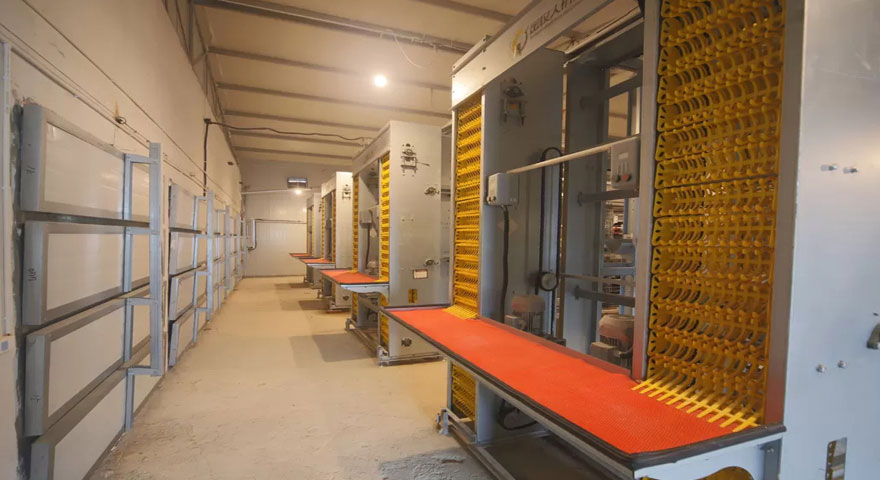
Gentle collection of eggs minimizes egg damage.
Better disease control
Thorough manure removal and better biosecurity reduce the risks of disease outbreaks.
Simpler management
Automated systems support day-to-day management and flock supervision.
Recommended Cage for 10,000 Birds
The recommended bird composition may vary depending on the breeder’s location, flock age, and management system. Usually, it is 1 rooster to 9 hens ratio, which determines that approximately 10% of the total number of birds should be cockerels. However, the ratio may range from 1:8 to 1:12. For example, for a 10,000-bird flock, there should be 8,889 – 9,231 hens and 769 – 1,111 roosters.
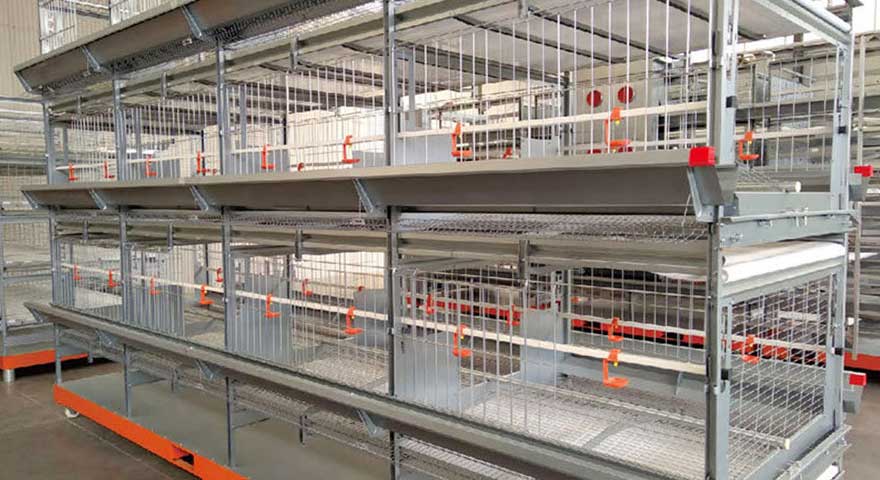
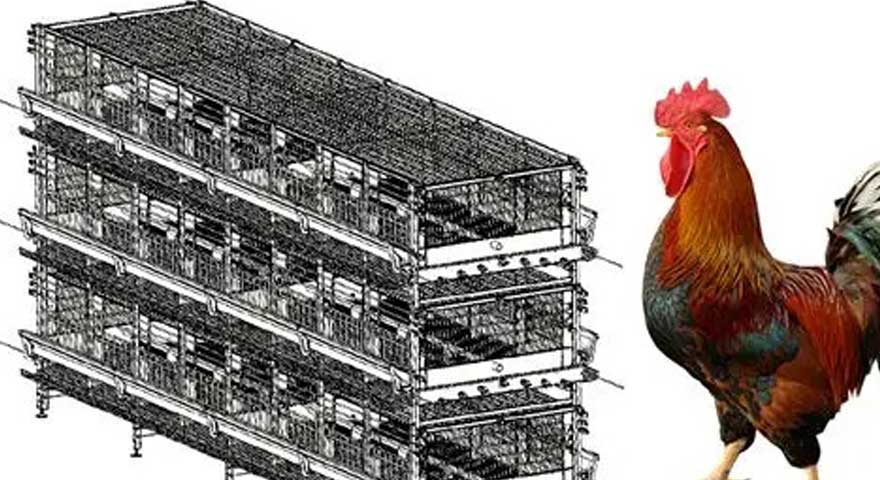
As for the recommended cage type for 10,000 birds, it is a four-tier H- or A-type breeder cage. The standard cage size is 2,880×2,150×3,200 mm, with each cell measuring 650×625×430 mm and able to hold 9-10 birds. Thus, 48-49 cage sets are required for a 10,000-bird flock with 2 rows of 24-25 sets each.
Basic Components of the chicken Breeding Cage
.jpg)
Breeding cages
Hot-dipped galvanized steel cages (minimum zinc coating 275 g/m2) Durable and reliable: expected service life is 15-20 years
Feeding system
Separate male and female feeding systems with precision feeding (deviation ±3%) Ensures the required amount of feed for each bird
Drinking system
Automatic drinkers with a water pressure of 0,2-0,3 bar
Manure removal system
Belts for removing droppings from the cage tiers; daily or double daily removal
Egg collection system
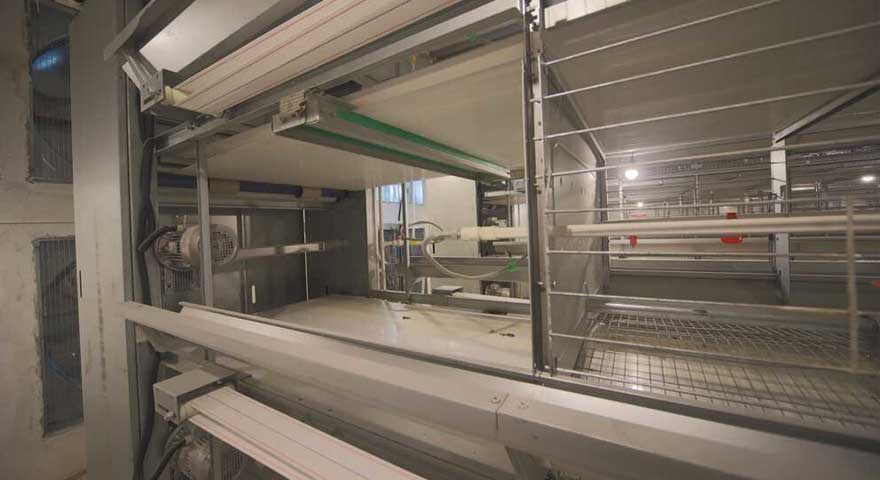
Belts for egg transfer with less than 1% breakage rate Low damage and noise
Climate control
Fans, evaporative cooling, and heating system Temperature: 18-24°C; Humidity: 50-65%
Insemination equipment (optional)
Chicken House Project for 10,000 Birds
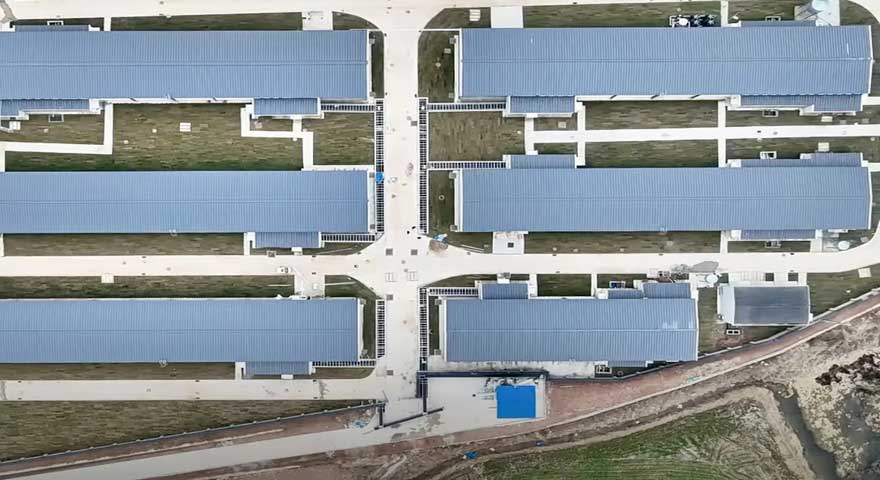
House width: 7,4 m (2 rows of bird cages with a corridor)
House length: Approximately 74.5 m (depends on the cage arrangement)
House height: 3.2-3.5 m
Floor area: Approximately 550 m2
Ventilation: The tunnel type, located at the side walls. Air velocity: 2.25 – 3 m/s. Includes evaporative cooling pads and exhaust fans
Biosecurity: Egg storage room, artificial insemination room (optional), quarantine, feed storage, and preparation, and housekeeping department
Equipment list
.jpg)
49 sets of 4-tier breeder cages: Provide housing for all birds
Feeding system: Male and female feeders Separate feeding of roosters and hens
Drinking system: Includes nipple drinkers and regulator Provide birds with access to clean water
Egg collection system: Belt egg collection system Collect and transport eggs with minimal damage and noise
Manure removal system: Belts for manure removal Daily removal of droppings from the cage tiers
Ventilation system: Fans, coolers, and inlets Ensure a constant supply of fresh air to the cage
Lighting system: LED light bulbs with dimmers Create the right light regime
Climate control system: Regulates temperature and air humidity
Backup generator: Eliminate power outages
Estimated Cost of the 10,000-bird Breeding Cage Farm
Equipment Quantity Estimated Cost
Cage system: 49 sets $10,000 – 25,000
Cage system: 49 sets $10,000 – 25,000
Feeding system: 1 set $3,000 – 8,000
Installation: 1 2,000 – 5,000
Building 1 house: $15,000 – 40,000
Parent stock: 10,000 birds $5,000 – 15,000
Total 40,000 – 100,000+
The total cost of a fully automatic breeding cage system for 10,000 chickens is $50,000+.
Performance Indicators for Breeding Cage Farm
Fertility rate: 85 – 95%
Hatchability rate: 80 – 90%
Number of hatching eggs per hen per year: 80 – 90
Feed conversion ratio: 2.0 – 2.5:1
Chick production per 1 hen per year: 585,000 chicks/year (9,000 hens x 85% fertility x 85% hatchability, i.e., 9,000 x 0,85 x 0,85 = 6,502,5 x 1,0 = 6,502,5)
Essential Management Practices
.jpg)
Sex ratio
The sex ratio depends on the breeder, flock, and mating system. Usually, it is 1:9 or 1:10, while the acceptable range is between1:8 and 1:12. It is vital to maintain the appropriate sex ratio as removing all roosters from the cage is necessary to change this ratio. In case of a significant deviation from the norm, it is advisable to replace the entire male sub-flock.
Body weight management
Automated feeding ensures uniformity of birds in weight.
Light intensity
5 – 15 lux Day length should increase gradually to stimulate maturity
Artificial insemination
In case of using artificial insemination insemination stations, there is no need to remove roosters and replace them often as they do not compete with each other. Besides, artificial insemination may be used to improve hatchability.
Egg collecion
The more fertile eggs the breeder gets, the more chicks the hatchery will have to sell. Thus, eggs should be collected several times a day and handled gently to avoid damaging the shells.
Biosecurity
The biosecurity level directly impacts the profitability of the farm. It is crucial to implement all necessary biosecurity measures, such as using foot baths and changing clothes, to prevent disease spread. Having a backup generator is also vital to save the flock in case of natural disaster or human error.
General recommendations on chicken breeder cage farm
.jpg)
What is the appropriate sex ratio for a breeder flock?
The appropriate ratio might vary depending on several factors, such as the breeder, flock, and mating system. Usually, it is 1:9 or 1:10, but it might also be 1:8, 1:11, 1:12, 1:14, or 1:18. It is vital to maintain the appropriate sex ratio as removing all roosters from the cage is necessary to change this ratio. In case of a significant deviation from the norm, it is advisable to replace the entire male sub-flock.
How many fertile eggs will a breeder flock of 10,000 chickens produce?
According to the standard breeder flock performance, 10,000 chickens will produce 765,000 fertile eggs with the 90% egg production (9,000 hens x 85 eggs per hen per year): 9,000×85=765,000. 765,000×0.9=688,500 – number of fertile eggs with 90% fertility rate. On average, 688,500×0,85=585, 525 eggs will hatch and become chicks.
What are the advantages of a breeder cage vs layer cage?
Compared to other housing systems for egg-laying chickens, the breeder cage system provides better hygiene and reduced labor costs. Besides, it ensures the birds get enough food and water and produces clean eggs. Compared to floor systems, a breeder cage system allows for better management of the flock and egg production. At the same time, floor housing systems provide more space for birds for laying eggs, which makes them more suitable for some farms.
Are there any risks or challenges working with breeder cages?
As with any intensive husbandry system, breeder cages require careful operation to avoid disease epidemics. They also require proper maintenance. Although they are safe and comfortable for birds, they have to be cleaned regularly and checked for possible damage. Another potential challenge is the initial setup and adjustment of the project.
What is the expected lifespan of breeder cages?
The expected lifespan of breeder cages can vary depending on the material that was used and the local environment. Usually, hot-dipped galvanized steel cages have a service life of 15-20 years.
Can you recommend a different system for my breeding cage farm?
We can offer different solutions for your breeding cage farm, depending on the scale that you want to adopt, the level of automation, climate control, and other factors.
- Cabinet Incubator
- Battery Cage
- Poultry Farm Design Solutions
- Layer Poultry Farm Design For 5000 Birds
- Poultry House Plans For 10000 Chickens
- Broiler House Design For 50000 Birds
- Poultry House Plans for 1000 Chickens
- Poultry House Plans For 5000 Broiler Chickens
- 20000 Layer Poultry House Design
- 50000 Layer Poultry Farm Design
- 40000 Layer Poultry Farm Design
- 100000 Chicken Layer House Design
- 30000 Layers Housing Design
- Chicken Cages
- Poultry Farm Equipment
- Other Poultry Cages
- Egg handling equipment
 Aviary Housing Project In The United States
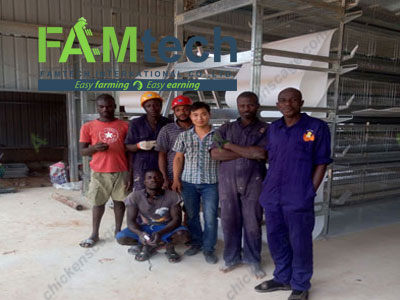 A 5-tier H type layer cage system installed in West Africa
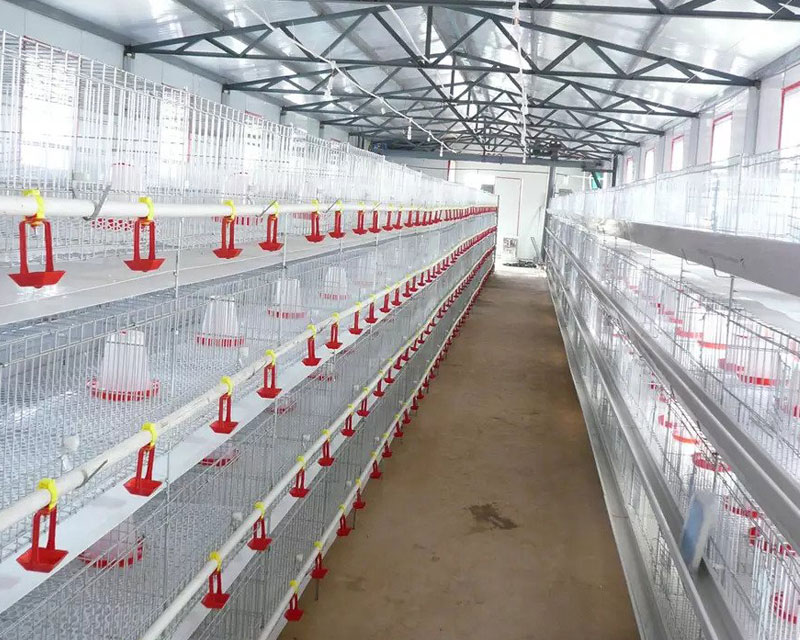 4 Tier H Type Broiler Cage Project In South Africa
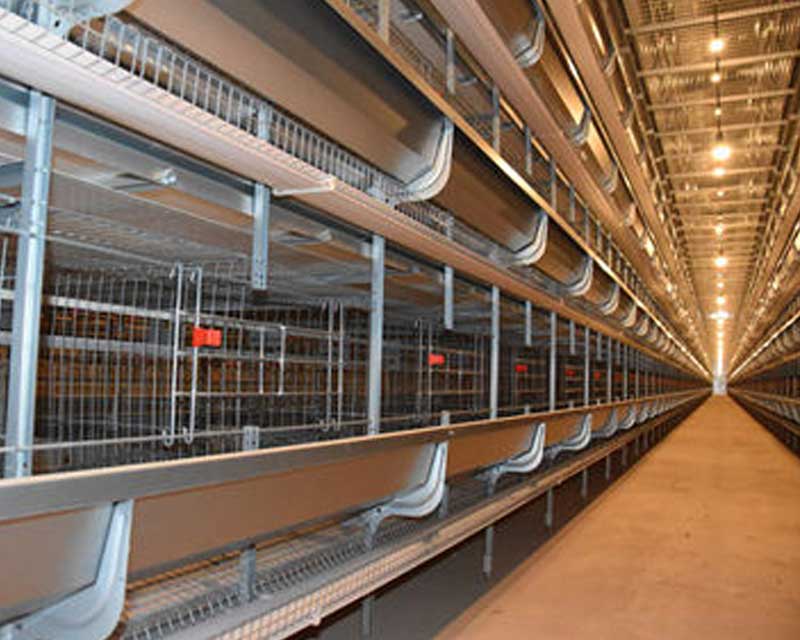 Layer Cage Project In Cuba
 H Type Layer Cage Project In Southeast Asia
 A Type Layer Cage Installed In West Africa
- info@chickenscage.com
- +86 18937276336
- 1103 Room, 11th Floor, Lande Centre, Huayuan Road, Zhengzhou, Henan, China